

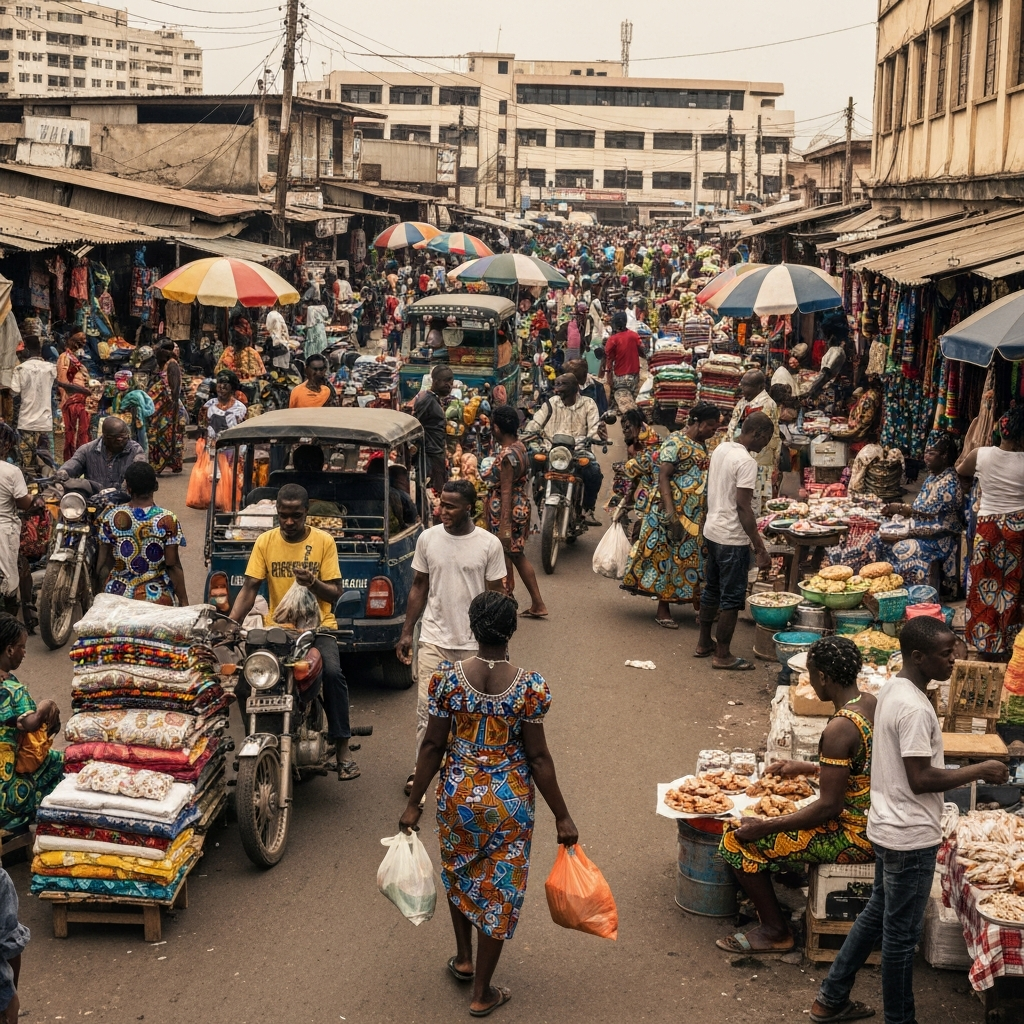
Accra’s economic landscape is significantly shaped by its informal sector, encompassing street vendors, market traders, and mobile businesses. These enterprises are integral to the city’s daily commerce, offering employment opportunities and essential goods and services to residents.
Prevalence and Economic Contribution
According to the Ghana Statistical Service’s Integrated Business Establishment Survey (IBES), Ghana hosts approximately 2.64 million businesses. Notably, 26% operate in open spaces, and 3.1% are mobile businesses, collectively representing nearly 30% of all enterprises. This substantial presence underscores the informal sector’s critical role in sustaining the nation’s economy. Source
Employment and Gender Dynamics
Open-space businesses alone employ over 922,000 individuals, with a significant concentration in the Greater Accra and Ashanti regions. These enterprises are predominantly owned by Ghanaians, with women constituting nearly 80% of the workforce in open-space but fixed-location businesses. This highlights the informal sector’s role in promoting gender inclusion and providing livelihoods for a substantial portion of the population. Source
Challenges Faced by Informal Businesses
Despite their contributions, informal businesses encounter several challenges, including high operating costs, limited access to affordable financing, and infrastructure deficits. Rising utility bills, escalating rent, and inflation-driven price hikes further strain these enterprises, affecting their profitability and sustainability. Source
Pathways to Formalization and Growth
Transitioning from informal to formal operations presents opportunities for growth and stability. Formalization can enhance credibility, improve access to financing, and open avenues for government support. Additionally, skills development in areas such as financial management and strategic planning can empower business owners to navigate market challenges more effectively. Source
In conclusion, informal businesses are indispensable to Accra’s economic vitality. Addressing their challenges through supportive policies, infrastructure development, and capacity-building initiatives can further strengthen their contributions to the city’s economy.