

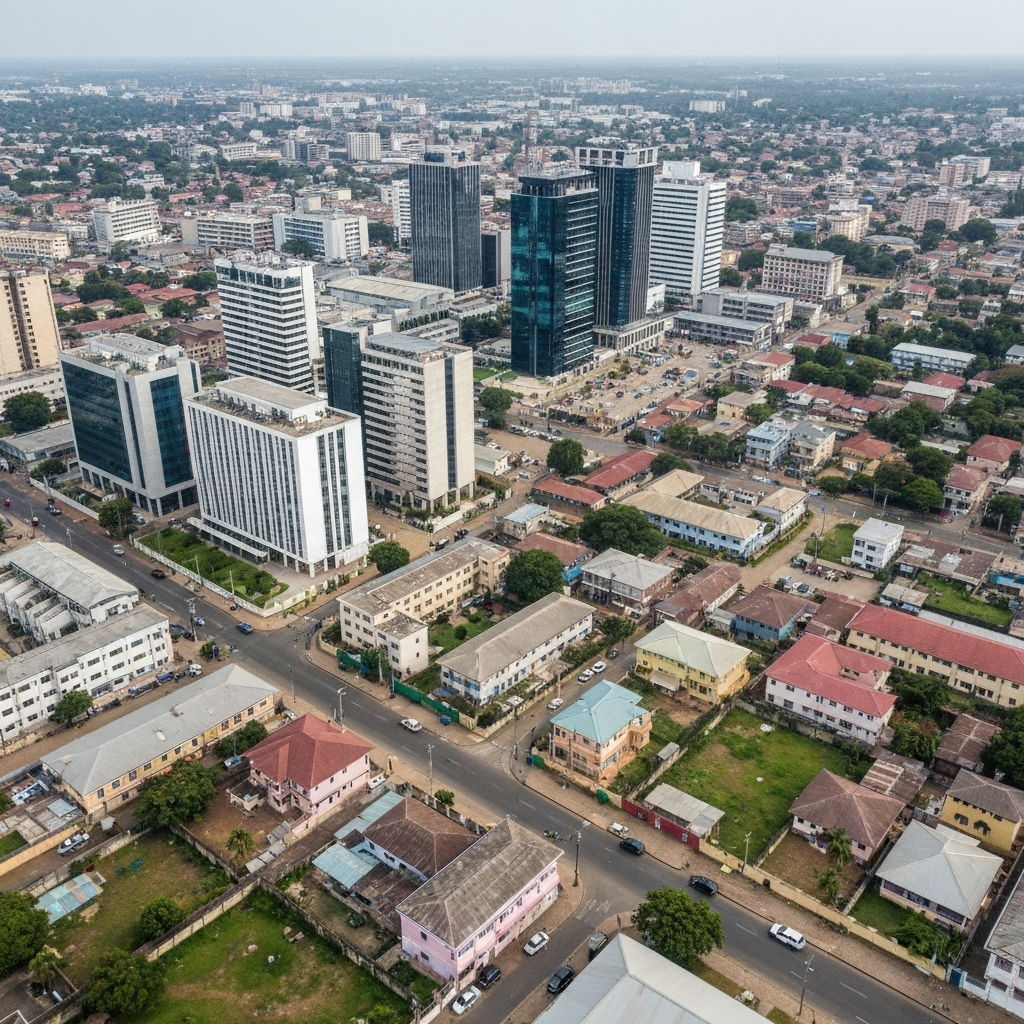
Accra’s real estate market is experiencing significant transformations, influenced by urbanization, economic shifts, and evolving consumer preferences. This article provides an overview of current market trends, rental dynamics, home buying insights, and local developments shaping the city’s property landscape.
Market Trends
Accra’s property market has shown resilience, with mid-market townhouses and gated community homes leading in performance. These segments have recorded double-digit annualized price growth in cedi terms, driven by strong demand and limited supply. Conversely, luxury apartments in prime areas face challenges due to oversupply and a limited buyer pool, resulting in longer selling times. Nominal price growth across mainstream segments sits in the 5-8% annualized range for Greater Accra. Source
Rental Market Dynamics
The rental market in Accra remains active, with vacancy rates for well-priced mid-market and prime apartments ranging from 4% to 10%. Year-over-year rent growth in prime areas is approximately 8–14%, driven by concentrated expatriate and corporate demand. Secondary suburbs like Adenta, Madina, and Spintex show steadier growth of 5–8%. Rental benchmarks as of Q2 2026 are as follows:
- Single room self-contained: GH₵600–1,500/month in inner suburbs; GH₵350–GH₵800 in outer suburbs.
- Chamber and hall self-contained: GH₵1,000–2,500/month in most areas; GH₵2,500–5,000 in prime locations.
- 1-bedroom apartment: GH₵1,500–4,000/month in mid-market areas; $800–2,500/month in prime areas.
- 2-bedroom apartment: GH₵2,500–7,000/month in mid-market areas; $1,200–4,000/month in prime areas.
- 3-bedroom apartment/house: GH₵4,000–15,000/month in mid-market areas; $2,000–6,500/month in prime areas.
- Executive 4-bedroom house: GH₵15,000–40,000+/month in mid-market areas; $3,000–10,000+/month in prime areas.
Home Buying Insights
For prospective homebuyers, understanding the market’s nuances is crucial. Mid-market townhouses and gated community homes are currently the strongest performers, with some clusters recording double-digit annualized price growth in cedi terms. Luxury apartments in prime Accra enclaves remain sluggish due to oversupply and a limited buyer pool, pushing selling times past six months in many cases. Rental yields are stable to slightly improving for well-managed, well-located properties. Source
Local Developments
Several neighborhoods in Accra are emerging as real estate hotspots due to infrastructure improvements and increasing demand. Oyarifa, along the Adenta-Aburi corridor, is transforming into a bustling residential zone, offering strategic access to both Accra and Aburi via the highway. This area is attracting families, professionals, and returnees seeking affordable housing options with growth potential. Source
In conclusion, Accra’s real estate market presents a dynamic environment with opportunities and challenges. Staying informed about market trends, rental dynamics, and local developments is essential for making informed decisions, whether you’re renting, buying, or investing in the city’s property landscape.