

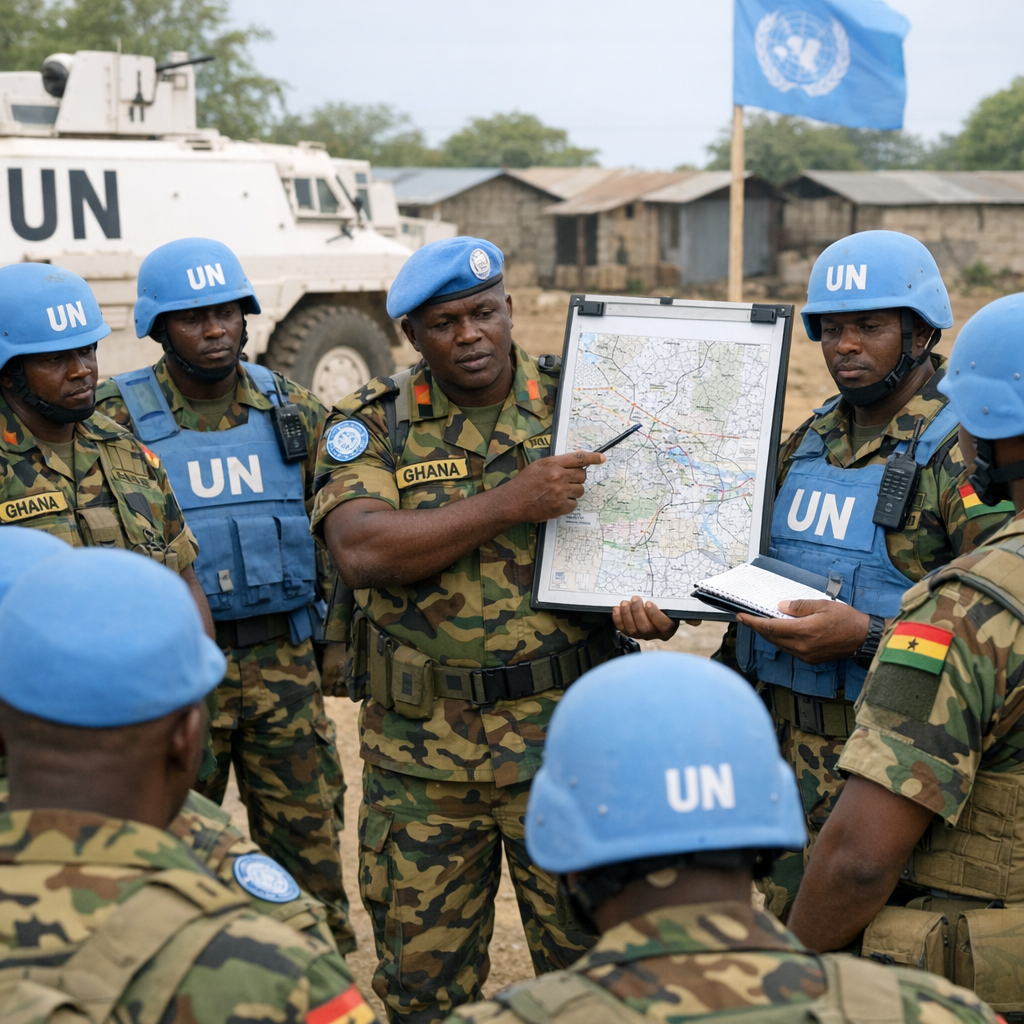
Ghana has long been recognized for its unwavering commitment to global peacekeeping efforts. Since its first deployment in the 1960s, the nation has consistently contributed troops to United Nations (UN) missions worldwide, earning a reputation for professionalism and dedication.
Historical Contributions
Ghana’s involvement in UN peacekeeping began with its participation in the United Nations Operation in the Congo (ONUC) in 1960. Over the decades, Ghanaian peacekeepers have served in various conflict zones, including Lebanon, South Sudan, and the Democratic Republic of Congo. As of recent reports, Ghana ranks among the top contributors of uniformed personnel to UN peacekeeping operations, deploying more than 1,900 military and police personnel across eight UN missions worldwide.
Recognition and Challenges
The international community has lauded Ghana’s significant role in peacekeeping. In 2023, the UN Under-Secretary-General for Peace Operations commended Ghana for its exemplary track record and for meeting gender parity targets in troop deployments. However, the landscape of peacekeeping is evolving. Financial and logistical challenges have led to reductions in some operations. For instance, in early 2026, Ghana repatriated personnel from missions in Lebanon and South Sudan due to these constraints.
Continued Commitment
Despite these challenges, Ghana remains steadfast in its commitment to global peace. The nation continues to advocate for increased investment in peacekeeping and conflict prevention. During the 78th International Day of United Nations Peacekeepers in May 2026, Ghana’s Deputy Minister for Foreign Affairs emphasized the importance of deliberate investments in strong institutions and effective peacekeeping operations to sustain global stability.
Ghana’s dedication to peacekeeping not only enhances its international standing but also reflects its broader commitment to global security and cooperation. As the world faces complex security challenges, Ghana’s role as a reliable contributor to peacekeeping efforts remains crucial.