

By Yaw Appiah
Accra is growing fast—too fast for many of its systems to keep up. Across informal settlements and established neighbourhoods alike, gaps in sanitation, drainage, housing, and transport are becoming a daily problem for residents. Below is a look at the realities on the ground and what needs doing to make city life more livable.
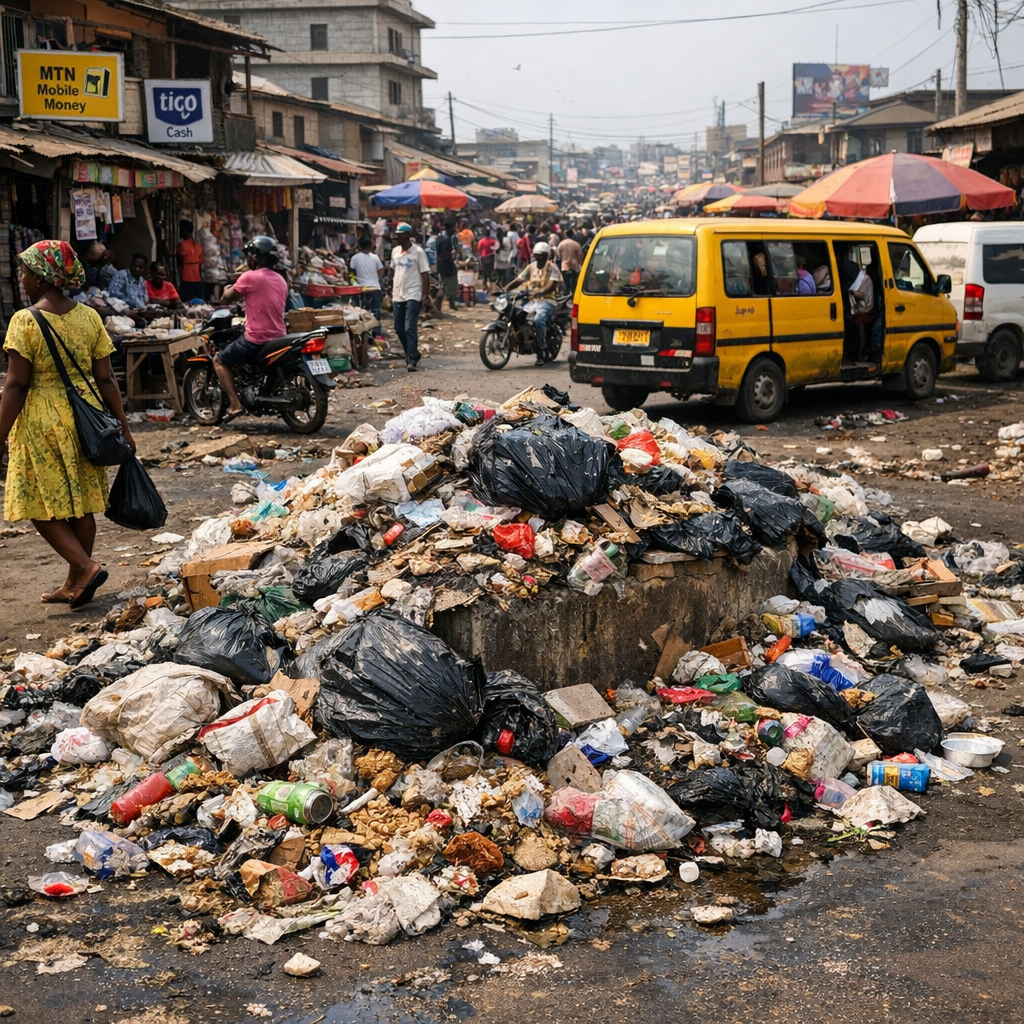
Filthy Drains, Overflowing Waste, Rising Flood Risk
In places like Korle, Old Fadama, and parts of Jamestown, heaps of refuse choke drainage channels, especially during heavy rain. Traders at Kaneshie Market complain of overflowing bins, pest infestations, and foul odours. In many homes, household waste sits uncollected for weeks. These conditions don’t just make neighbourhoods unpleasant—they heighten the risk of disease and flooding. Authorities and community leaders have warned that without swift intervention, lives and homes remain under threat.
Housing & Informal Settlements: Living at the Edge
Nearly 60 percent of Accra’s population lives in poorly planned, overcrowded neighbourhoods. Many have sparse infrastructure—few paved roads, limited indoor water and sewage connections, and undefined property rights. Rent often eats up large portions of income in planned areas, pushing lower-income residents further out where services are scarce and travel times soar.
Transport Gaps: Beyond the Gridlock
While traffic congestion is a familiar headache in central Accra, different problems emerge in the city’s growing peripheries. Many walk long distances to reach health clinics, schools, or markets. Public transport services like trotros are unreliable, and roads in outer areas are usually unpaved or poorly maintained. For the majority who can’t afford private cars, this means daily journeys that are exhausting and time-consuming.
What Change Looks Like
- Incremental infrastructure upgrades: Fixing and maintaining existing drainage systems, installing more waste bins and collection points, and gradually paving roads in underserved areas.
- Community-driven sanitation: Supporting local cooperatives and tricycle waste collectors, especially in informal settlements, can ensure more frequent collection and better waste management.
- Long-term planning with accountability: Better coordination between municipal authorities, community groups, and national planners is essential. Transparent budgeting and consistent policies help avoid frequently changing priorities.
- Closer placement of essential services: Schools, clinics and markets need to be better distributed as suburbs expand, so residents aren’t cut off physically or financially.
Moving Forward
These challenges are not new—but they are growing in urgency. If Accra is to thrive, investment in basic infrastructure must keep pace with population growth. And while city-wide plans matter, many solutions have to happen at street level, led by communities that know their neighbourhoods best.