

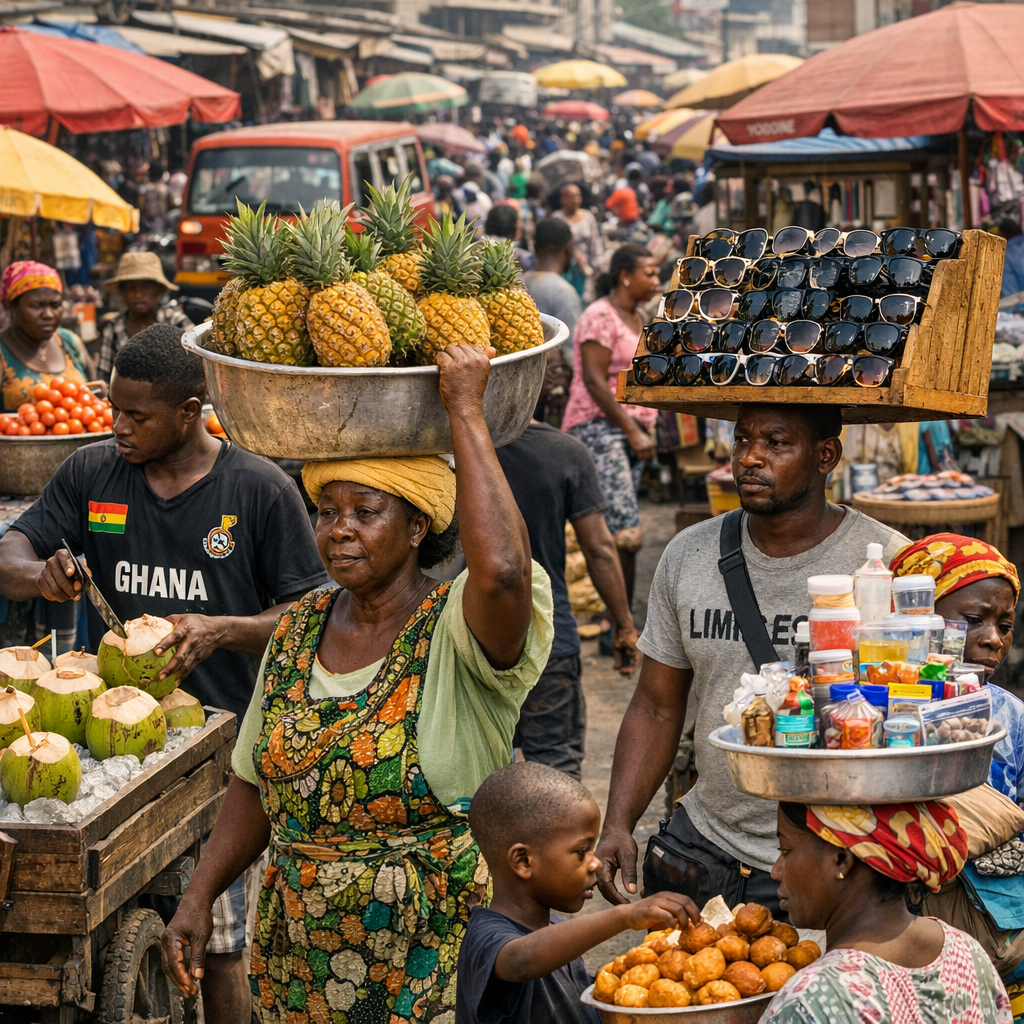
Accra’s economy thrives on a dynamic blend of formal enterprises and a robust informal sector. This informal economy, comprising street vendors, mobile traders, and open-space businesses, plays a pivotal role in the city’s economic landscape.
Scope and Significance
According to the Ghana Statistical Service’s Integrated Business Establishment Survey, Ghana hosts approximately 2.64 million businesses. Notably, about 26% operate in open spaces, and 3.1% are mobile businesses. In Accra, these informal enterprises are particularly concentrated, reflecting the city’s vibrant commercial activity.
Employment and Economic Contribution
The informal sector is a significant employment driver. Open-space businesses alone employ over 922,000 individuals nationwide, with a substantial portion based in Accra. These enterprises offer accessible employment opportunities, especially for those unable to enter the formal job market.
Challenges and Resilience
Despite their contributions, informal businesses face challenges such as limited access to capital, exposure to weather conditions, and regulatory constraints. However, their resilience is evident. Many operators work at least six days a week, with nearly half exceeding 49 hours weekly, demonstrating their dedication and adaptability.
Policy Implications
Recognizing the informal sector’s role is crucial for policymakers. Investing in market infrastructure, providing access to microfinance, and offering training in business management can support these businesses. Such initiatives can enhance their productivity and facilitate their transition into the formal economy.
In conclusion, Accra’s informal sector is not merely a peripheral component but a cornerstone of the city’s economic vitality. Supporting and integrating these businesses into broader economic strategies is essential for sustainable urban development.