

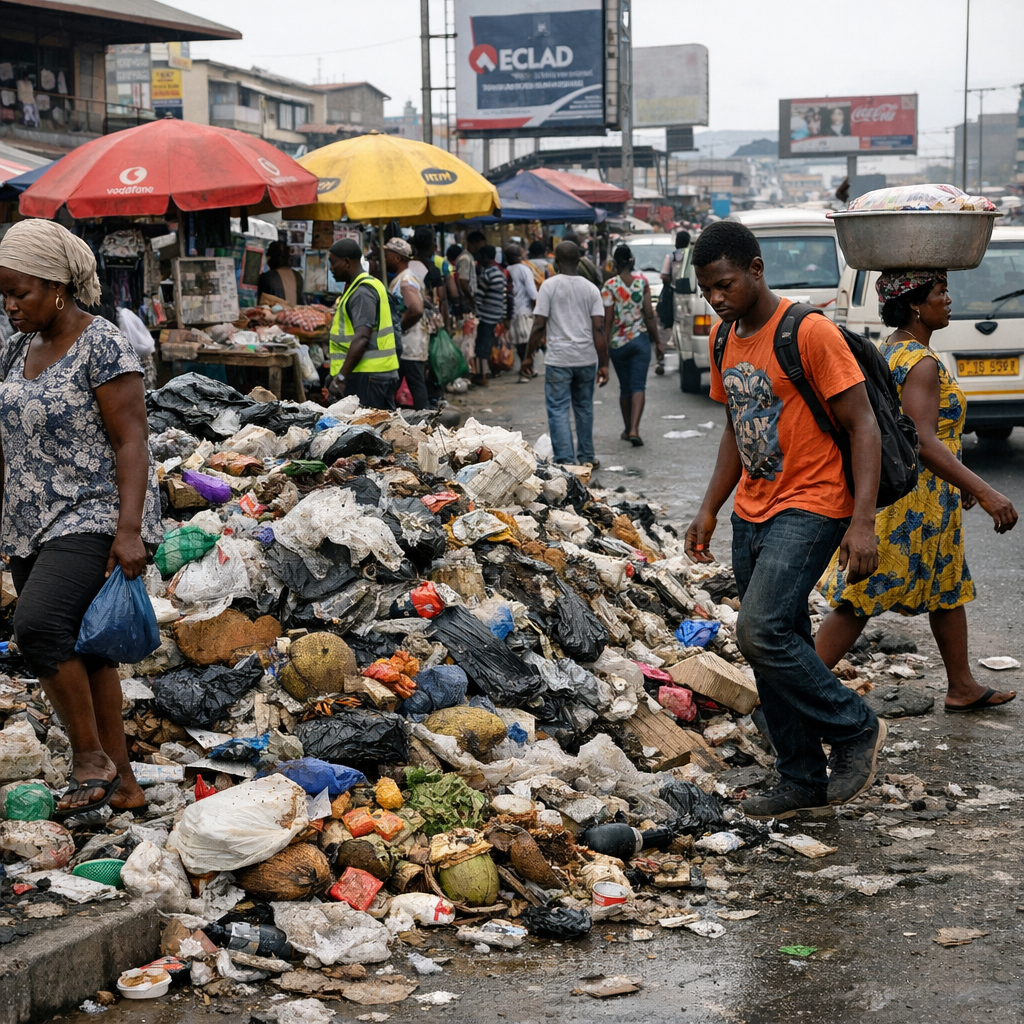
Accra, Ghana’s bustling capital, continues to grapple with significant sanitation challenges that impact both public health and the environment. Despite various initiatives, issues such as waste accumulation, inadequate waste disposal facilities, and pollution remain prevalent.
Waste Accumulation and Disposal
Residents and workers around the Kwame Nkrumah Interchange have expressed frustration over recurring sanitation issues. Despite regular clean-up efforts, waste continues to pile up due to a lack of waste bins and other systemic challenges. Authorities are being urged to address the problem.
Informal Settlements and Sanitation
In areas like Agbogbloshie, informal settlements face severe sanitation issues. High population density, poor waste management, and lack of access to safe drinking water contribute to health risks, including diarrheal diseases and respiratory infections. The resurgence of pollution in these areas underscores the need for sustainable solutions.
Community Initiatives
Community-based organizations, such as the Buz Stop Boys, have emerged to tackle sanitation challenges. Founded in 2023, this volunteer group focuses on cleaning streets, bus stops, and public spaces, promoting environmental awareness and civic responsibility. Their efforts highlight the importance of community involvement in addressing sanitation issues.
Policy Recommendations
Experts suggest embracing a circular economic model, integrating informal sector actors, and harmonizing legal and institutional frameworks to improve waste management. Recognizing and supporting the informal sector’s role in waste collection could enhance efficiency and sustainability.
Addressing Accra’s sanitation challenges requires a multifaceted approach, combining government action, community engagement, and sustainable practices to create a cleaner and healthier city for all residents.