

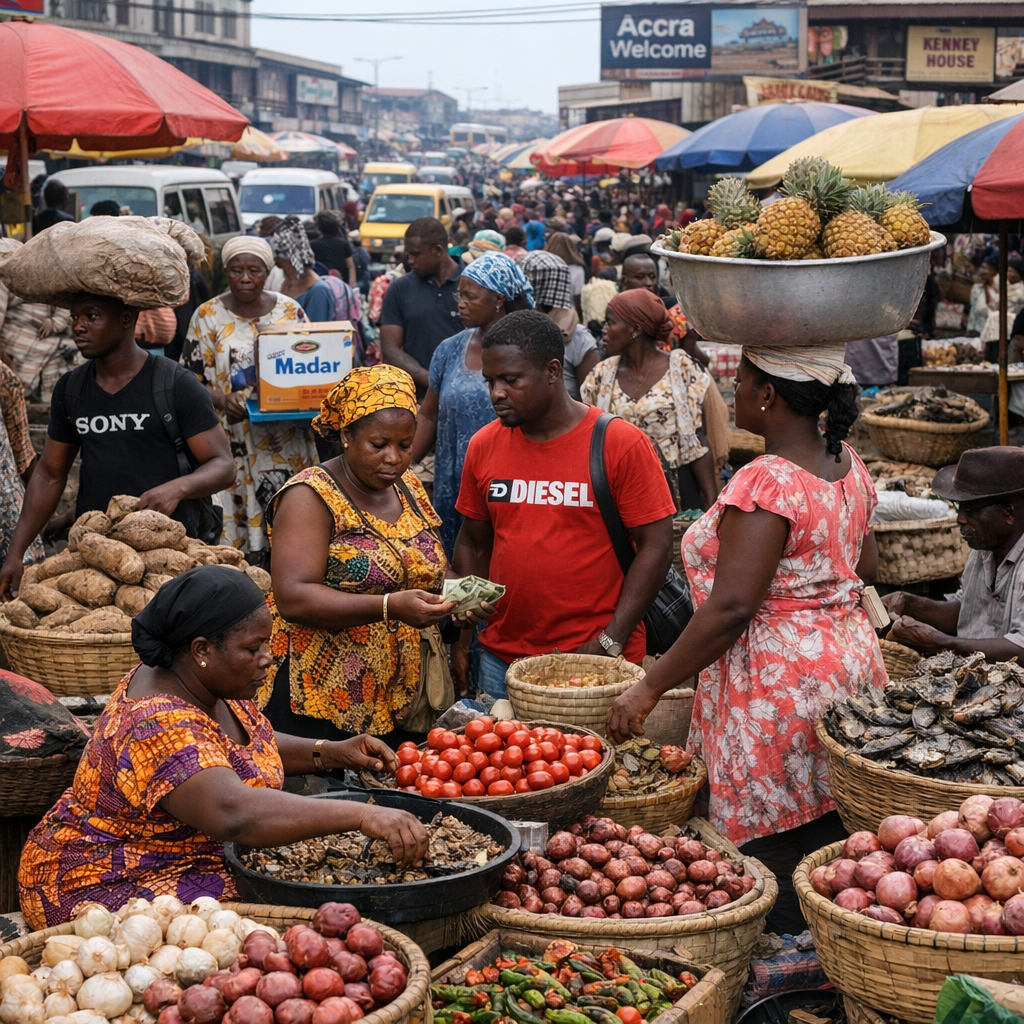
In an increasingly interconnected world, global economic trends significantly influence national economies, including Ghana’s. Understanding these dynamics is crucial for policymakers, businesses, and citizens alike.
Global Economic Outlook
As of 2026, the global economy is navigating a complex landscape characterized by moderate growth and evolving trade dynamics. The International Monetary Fund (IMF) projects a global GDP growth rate of approximately 3.2%, reflecting a resilient yet cautious economic environment. This growth is underpinned by factors such as stabilizing commodity prices and adjustments in monetary policies across major economies.
Implications for Ghana
Ghana’s economy is deeply intertwined with global markets, particularly through its exports of commodities like gold, cocoa, and oil. The country’s economic performance is thus susceptible to fluctuations in global commodity prices and external financial conditions.
Commodity Price Volatility
Ghana’s reliance on commodity exports makes it vulnerable to price swings in the global market. For instance, while rising gold prices have bolstered export revenues, any downturn could adversely affect the economy. PwC’s 2026 West Africa Economic Outlook cautions that despite recent stability, Ghana remains exposed to commodity price volatility and global financial tightening. Source
Inflation and Monetary Policy
Global economic conditions also influence domestic inflation and monetary policy. Ghana has made strides in reducing inflation, achieving a single-digit rate of 9.4% in September 2025 after years of double-digit figures. This progress is attributed to a strong cedi, declining non-food prices, and reduced supply-side pressures. However, potential risks such as higher utility tariffs and persistent domestic food prices could challenge this stability. Source
Fiscal Discipline and Debt Management
Global financial tightening necessitates prudent fiscal management. Ghana has demonstrated improved fiscal discipline, with a positive primary balance of 1.5% of GDP in 2025. Nonetheless, the country must remain vigilant against external shocks that could impact debt sustainability and economic stability. Source
Strategies for Resilience
To mitigate the impact of global economic fluctuations, Ghana can adopt several strategies:
- Diversification of the Economy: Reducing dependence on commodity exports by promoting sectors such as manufacturing, technology, and services can enhance economic resilience.
- Strengthening Fiscal Policies: Maintaining fiscal discipline and building buffers can provide the flexibility needed to respond to external shocks.
- Enhancing Monetary Policy Frameworks: Adapting monetary policies to global trends while focusing on domestic economic stability can help manage inflation and currency volatility.
By proactively addressing these areas, Ghana can better navigate the complexities of the global economic landscape and foster sustainable growth.