

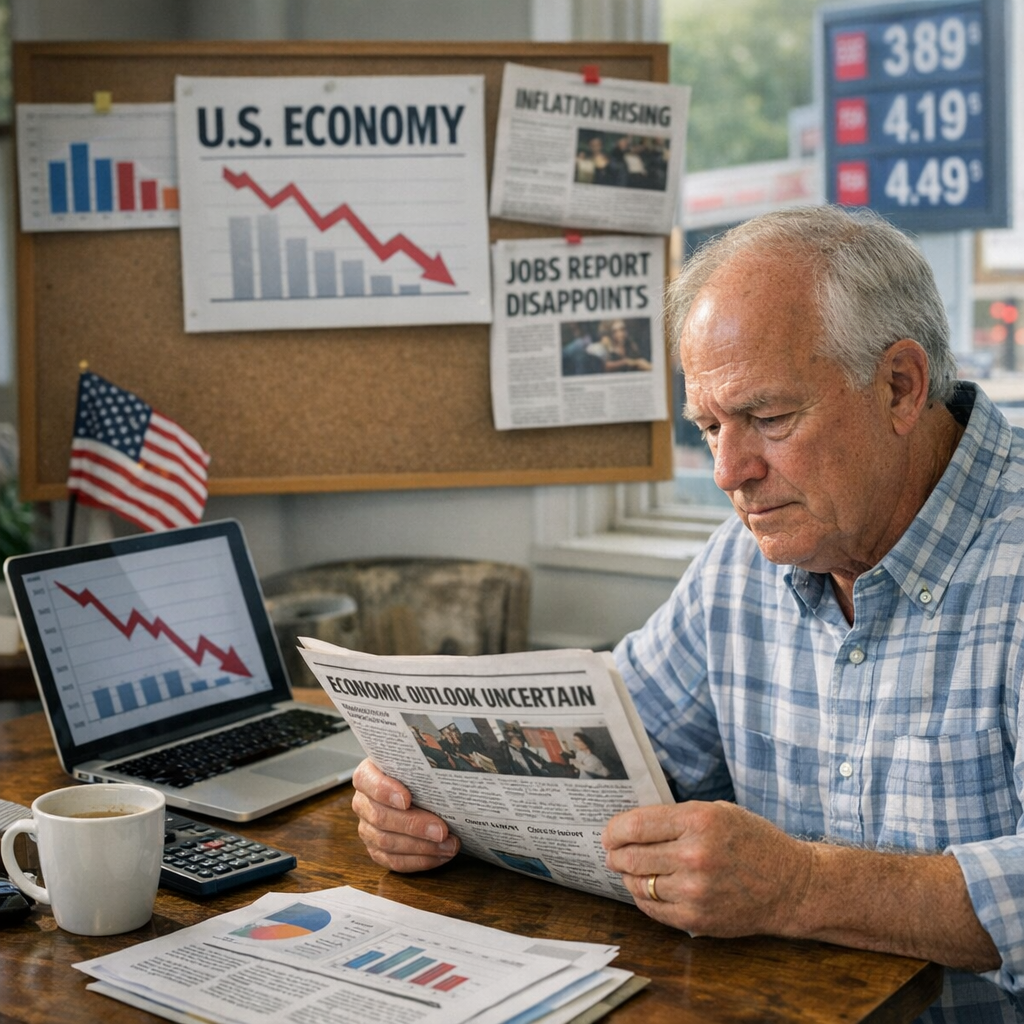
The United States economy has recently exhibited a mix of growth and challenges, reflecting the complexities of its vast economic landscape.
Economic Growth and Employment
According to the International Monetary Fund (IMF), the U.S. economy is projected to grow by 2.4% in the fourth quarter of 2026, an increase from 2.2% the previous year. This growth is accompanied by a decline in unemployment, with rates expected to drop from 4.5% in late 2025 to 4.1% in 2026. The IMF also anticipates that inflation will align with the Federal Reserve’s 2% target by 2027. However, the IMF cautions that rising federal budget debts could pose stability risks to the economy. [Source: Business Standard]
Inflation and Consumer Prices
Inflation remains a concern, with wholesale prices increasing by 4% in a recent month, complicating the Federal Reserve’s efforts to manage economic stability. This surge in prices has led to higher costs for consumers, particularly in essential goods and services. [Source: PBS News]
Political Climate and Public Sentiment
Public confidence in the political system is notably low. A Gallup poll indicates that approximately one-third of Americans view politics and government as the nation’s most pressing issues. This level of concern is higher than in most other wealthy democracies, highlighting the unique challenges faced by the U.S. political landscape. [Source: Associated Press]
Implications for Ghana
For Ghana, these developments in the U.S. economy are significant. The U.S. is a major trading partner and a source of foreign investment. Economic fluctuations in the U.S. can influence global markets, affecting commodity prices and investment flows that are crucial to Ghana’s economic health. Additionally, shifts in U.S. monetary policy, such as changes in interest rates, can impact global financial conditions, influencing capital flows and exchange rates that affect Ghana’s economy.
Staying informed about these trends is essential for policymakers, businesses, and individuals in Ghana to navigate the interconnected global economic environment effectively.