

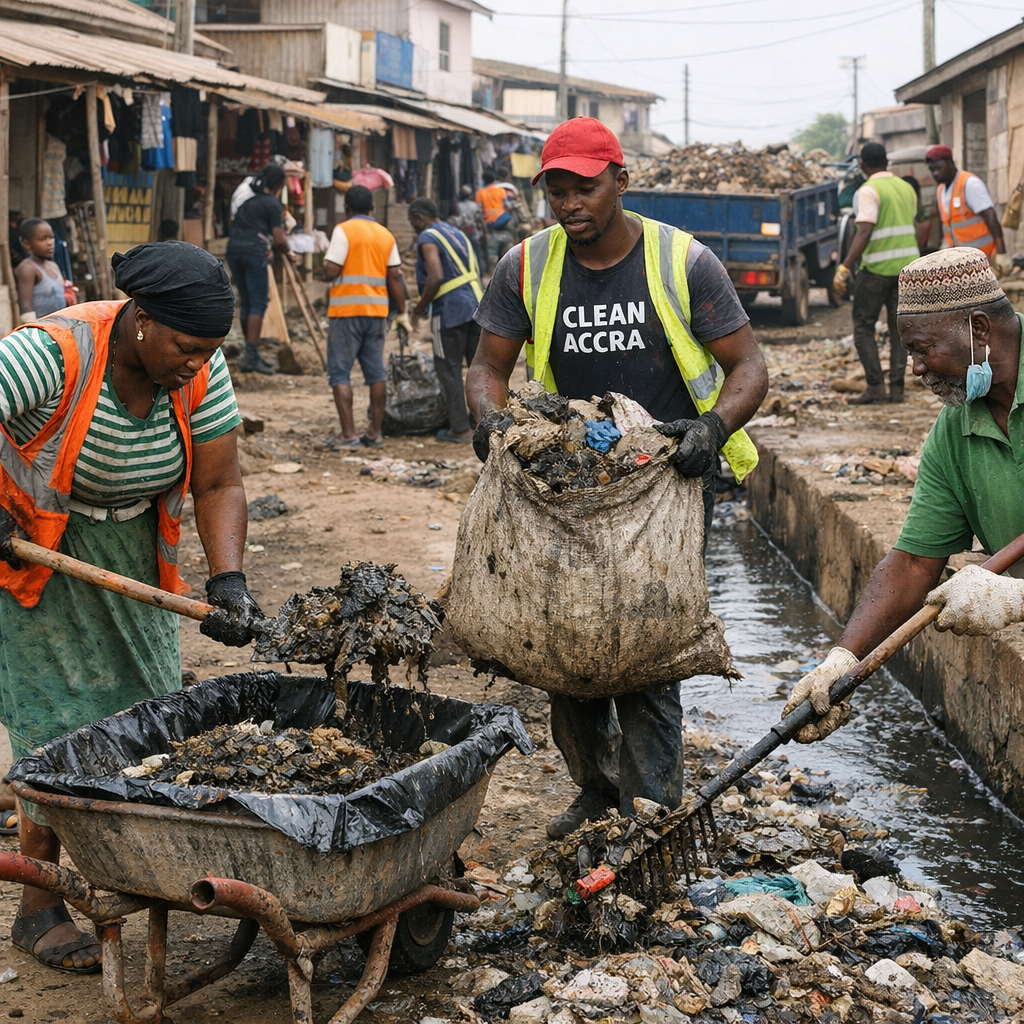
Accra, Ghana’s bustling capital, faces significant sanitation challenges, with waste management being a pressing concern for many communities. In response, local residents have initiated grassroots efforts to address these issues, demonstrating the power of community action in fostering a cleaner and healthier environment.
Community-Driven Clean-Up Campaigns
One notable example is the formation of volunteer groups dedicated to environmental sanitation. These organizations focus on cleaning streets, bus stops, and other public spaces, while promoting environmental awareness and civic responsibility. Their efforts have not only improved the cleanliness of various neighborhoods but also inspired other communities to undertake similar initiatives.
Collaborative Efforts with Local Authorities
In some areas, residents have collaborated with local government agencies and private waste management companies to enhance waste collection services. By mapping household locations and studying waste generation patterns, these partnerships have encouraged more residents to register for waste collection, raised awareness about proper waste disposal, and developed partnerships between the formal and informal sectors. Such collaborative approaches have led to more efficient waste management systems and improved sanitation conditions.
Addressing Sanitation in Public Markets
Accra’s vibrant markets are central to the city’s economy but often grapple with sanitation issues. Market vendors have begun to organize themselves to advocate for better working conditions and improved sanitation facilities. By establishing dialogues with local officials and learning new skills, these vendors aim to create safer and healthier workplaces, benefiting both traders and customers.
Challenges and the Path Forward
Despite these commendable efforts, challenges remain. Many low-income neighborhoods still lack adequate waste disposal facilities, and public toilets are often insufficient or poorly maintained. Additionally, the absence of functional decentralized sub-district structures limits effective engagement between communities and municipal authorities. To build on the progress made, it is essential for local authorities to support and scale up these community-led initiatives, invest in infrastructure, and foster stronger partnerships with residents to ensure sustainable improvements in sanitation across Accra.