

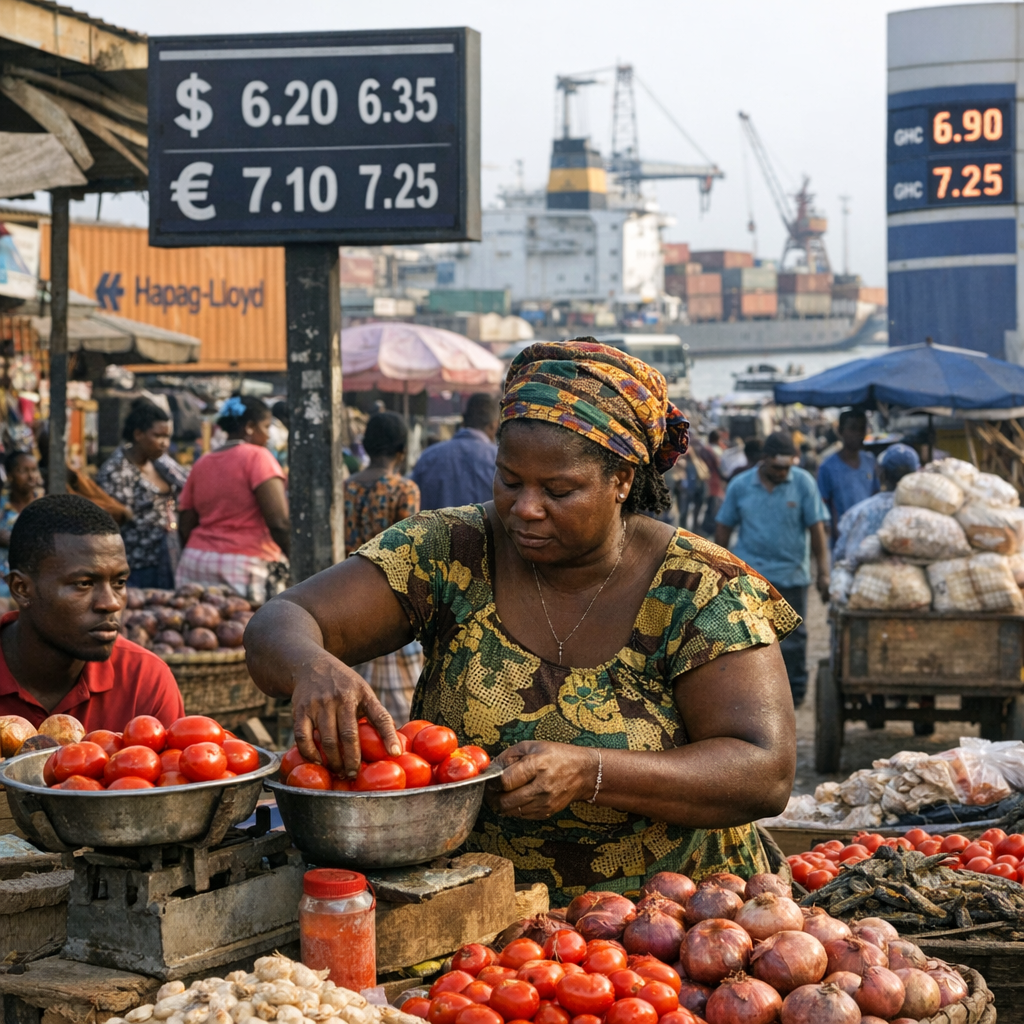
In an increasingly interconnected world, global economic trends significantly influence national economies, including Ghana’s. Understanding these dynamics is crucial for policymakers, businesses, and citizens alike.
Global Economic Outlook
The global economy in 2025 continues to navigate a challenging outlook with slowing growth, sustained trade tensions, and heightened policy uncertainty. World economic growth is estimated at a rate of 2.8% in 2025, below the pre-pandemic (2000-2019) average of 3.7%. Global inflation, on the other hand, has observed marked moderation, with a projected decline to 2.9%. This uptick is driven by stabilizing commodity prices and monetary policy adjustments. However, rising tariff-related pressures could erode these gains if not contained.
Impact on Ghana’s Economy
Ghana’s economy has demonstrated resilience amid these global challenges. In the second quarter of 2025, the country recorded a real GDP growth of 6.3%, driven by sectors such as fishing, information and communication technology, and finance and insurance.
However, Ghana remains vulnerable to external shocks. The country’s reliance on commodity exports, particularly gold and cocoa, exposes it to global price fluctuations. For instance, a blockade of the Strait of Hormuz, a critical artery for global oil flows, could disrupt trade volumes, affecting production, jobs, and fiscal targets in Ghana.
Policy Responses and Recommendations
To mitigate these vulnerabilities, Ghana has implemented several policy measures. The Bank of Ghana has adjusted interest rates, implementing a cumulative 650-basis-point cut to its monetary policy rate as of September 2025, aiming to stimulate credit and domestic demand.
Additionally, the government has initiated programs like the 24-hour Economy and Accelerated Export Development Programs to unlock economic potential, create jobs, and attract investment.
Despite these efforts, challenges remain. The International Monetary Fund (IMF) has cautioned that Ghana’s fiscal and monetary policy path is entering a more constrained phase as global risks intensify. The ongoing conflict in the Middle East presents significant headwinds, feeding through higher commodity prices, rising inflation expectations, and tightening financial conditions.
Conclusion
While Ghana has made commendable strides in stabilizing its economy, the influence of global economic trends cannot be overlooked. Continuous monitoring and adaptive policy measures are essential to navigate the complexities of the global economic landscape and ensure sustained growth and stability for Ghana.