

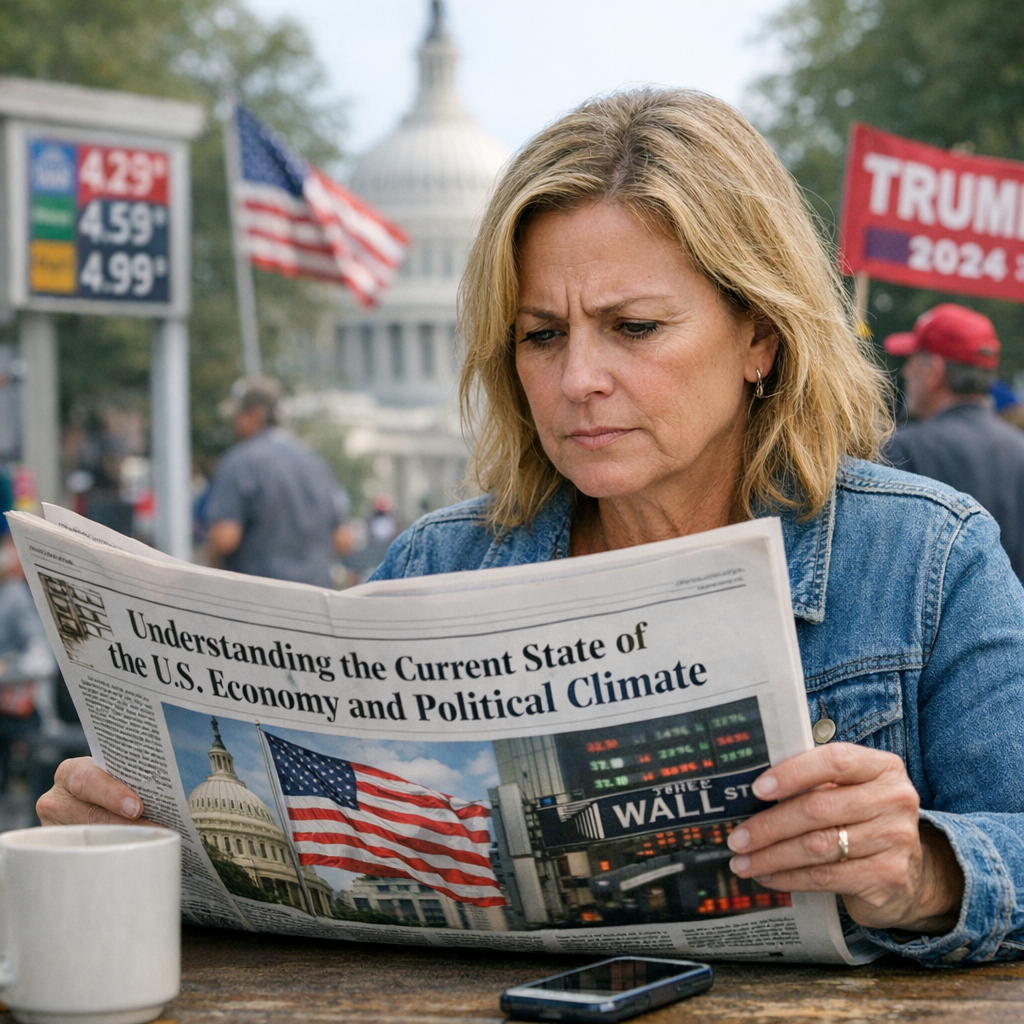
The United States is currently navigating a complex economic and political landscape, marked by significant developments that have both domestic and international implications.
Economic Overview
Recent data indicates a slowdown in economic growth. The U.S. economy expanded at a sluggish 0.7% annual rate in the fourth quarter, influenced by factors such as the 43-day government shutdown. Additionally, wholesale prices surged by 4% last month, complicating the Federal Reserve’s efforts to manage inflation. Source
Consumer confidence has also been affected, with Americans expressing concerns about the future of their jobs, cost of living, and the overall economy. This sentiment is reflected in the latest Gallup poll, which shows that about one-third of Americans identify politics and government as the nation’s most pressing problem. Source
Political Climate
On the political front, the U.S. is experiencing heightened anxiety over its political system. The same Gallup poll reveals that Americans are exceptionally anxious about their political system, a situation that sets the country apart from other wealthy nations. This concern is particularly stark among older Americans, while younger Americans are more focused on economic challenges like the affordability of housing and basic needs. Source
In response to these challenges, the Trump administration has implemented various measures, including regulatory actions aimed at controlling inflation and proposals to cap credit card interest rates. However, these initiatives have sparked debates regarding their effectiveness and potential long-term impacts on the economy. Source
Implications for Ghana
For Ghana, these developments in the U.S. hold particular significance. As a key trading partner, shifts in the U.S. economy can influence global markets, affecting export opportunities and foreign investment flows into Ghana. Additionally, changes in U.S. monetary policy may impact exchange rates and the cost of borrowing on international markets.
Understanding these dynamics is crucial for policymakers and businesses in Ghana to navigate potential challenges and seize opportunities arising from the evolving U.S. economic and political landscape.