

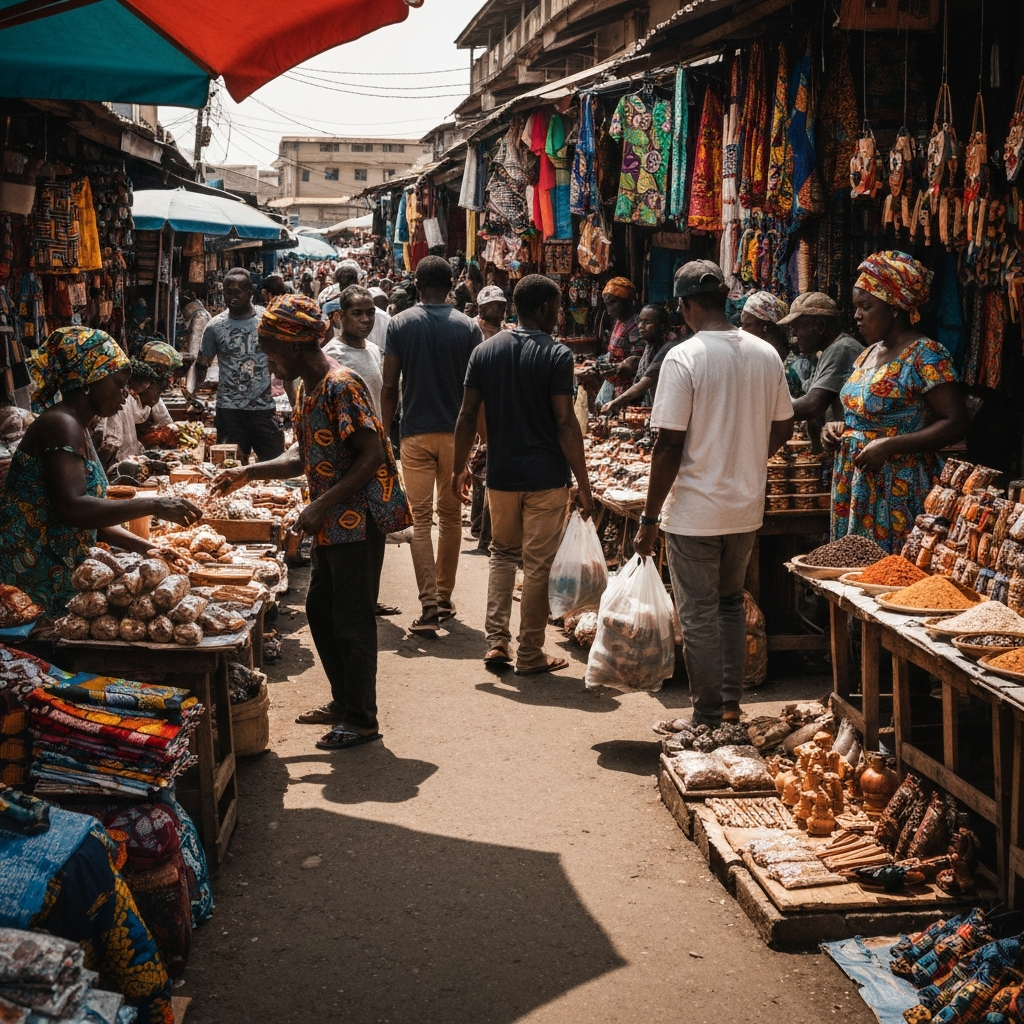
Accra’s economy is often measured by formal structures—registered companies, banking systems, tax records, and official employment statistics. However, beneath these visible layers lies a sprawling ecosystem that fuels daily commerce, supports millions of livelihoods, and keeps the city functioning: the informal sector. From street vendors and artisans to ride-hailing drivers, market traders, and small-scale service providers, the informal economy is not just a side character in Accra’s development story—it is the backbone.
Despite lacking the recognition and support given to formal businesses, the informal sector remains one of the most resilient, innovative, and adaptable economic engines in Accra. For thousands of young people moving into Accra each year, the informal sector is the quickest pathway to self-employment and financial independence.
The Informal Economy Keeps Goods and Services Affordable
Accra’s cost of living continues to rise, but informal businesses help cushion consumers. By operating small-scale, minimizing overhead costs, and adapting quickly to price changes, informal providers often offer more affordable goods and services than formal enterprises.
Examples include:
- Food vendors offering meals far cheaper than restaurants.
- Informal transport operators providing flexible travel options.
- Shoemakers, electricians, seamstresses, and repairers offering services at prices most households can afford.
- Market traders providing fresh produce at competitive prices due to low margins.
Without these providers, the average consumer in Accra would face significantly higher living costs.
Street Markets and Mobile Retail Drive Everyday Commerce
Markets like Makola, Mallam Atta, Kaneshie, Agbogbloshie, and Nima are central to Accra’s economic heartbeat. These hubs connect wholesalers, retailers, middlemen, and consumers in a fast-moving, adaptable supply chain.
Beyond the major markets, the rise of mobile retail—hawkers at traffic intersections, door-to-door sellers, and pop-up shops—ensures that goods flow seamlessly throughout the city. These traders thrive in the spaces where formal retail cannot operate due to high rental costs, slow processes, or rigid operating structures.
This informal distribution network is critical to ensuring product availability, especially for essential items like clothing, groceries, electronics accessories, baby items, household tools, and street foods.
The Informal Sector Supports the Formal Economy More Than People Realize
While often viewed separately, the formal and informal sectors are interconnected. Informal businesses supply goods and services to formal enterprises, contribute to the supply chain, and provide employment that supports consumer spending in the formal economy.
Recognizing and supporting the informal sector is crucial for Accra’s overall economic health. Policies that provide access to credit, training, and infrastructure can help these businesses thrive, benefiting the entire city.